Official HairMax Website
       
Physician Information Center

1.866.273.7795
 
HairMax Press Release
Official HairMax Website
Clinical Studies

Summary:

  • Multi-center, double blind, control device studies proved efficacy in males and females with AGA*.
  • Subjects used HairMax 3 times a week for 8-15 minutes per treatment
  • Males and Females 30 – 60 years of age
  • Males - Norwood Hamilton IIa-V, Fitzpatrick Skin Type I – IV
  • Females – Ludwig (Savin) I-4, II-1. II-2, or frontal, Fitzpatrick Skin Type I-Iv
  • Males - Increase of 21.6 hairs/cm² at 26 weeks over baseline
  • Females –Increase of 20.5 hairs/cm² at 26 weeks over baseline
  • Significantly greater increase in subject assessment of Thickness and Fullness of hair
  • No serious side effects reported


Clinical Results

Study Population: Males = 103 Subjects, Females = 65 Subjects

Mean Baseline Change at 26 weeks in Terminal Hair Density – hairs/cm²

In the male study 95% of the subjects in the HairMax treatment group exhibited hair growth at 26 weeks. Further, in the HairMax LaserComb group grew an average of 21.6 hairs/cm² vs. 4.3 hairs/cm² for subjects in the control device group (p<0.0001) . Consistent with these primary efficacy results, subject assessment of Thickness and Fullness (density) of hair at 26 weeks, were statistically significant for the HairMax group compared to the control device group (p=0.0114). The HairMax was well tolerated with no serious adverse events reported and no statistical difference in treatment groups.


In the female study, 100% of the subjects in the HairMax treatment group exhibited hair growth at 26 weeks. Further, subjects in the HairMax LaserComb group grew an average of 20.5 hairs/cm² vs. 2.7 hairs/cm² for the control device group (p<0.0001). Consistent with these primary results, subject assessment of Thickness and Fullness of Hair (density) at 26 weeks, were statistically significant for the HairMax group (p=0.0345). The HairMax was well tolerated with no serious adverse events reported and no statistical difference in treatment groups.


Subjects in the HairMax® LaserComb treatment group had significantly greater increase in mean terminal hair density than subjects in the placebo group (p<0.0001). Subjects in the HairMax LaserComb group also had significantly better subjective assessment of overall hair regrowth than subject in the placebo group (p=0.010). No subject experienced a serious adverse event and the adverse event profiles were similar between the two treatment groups.

Global Images

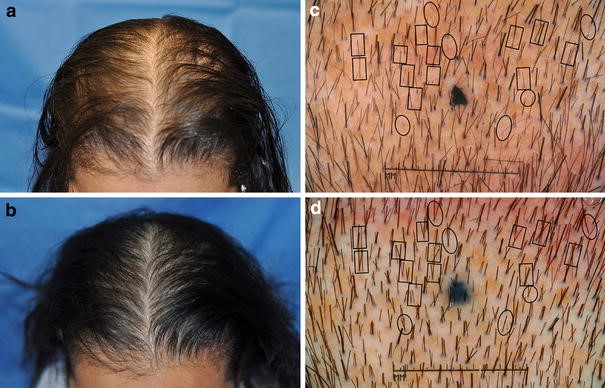
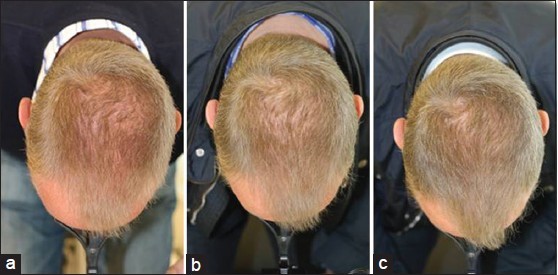
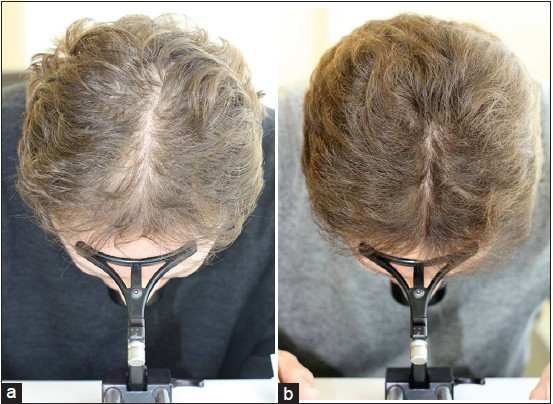
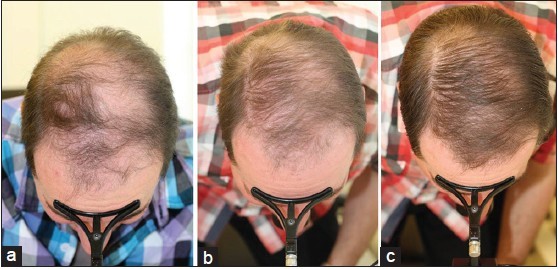
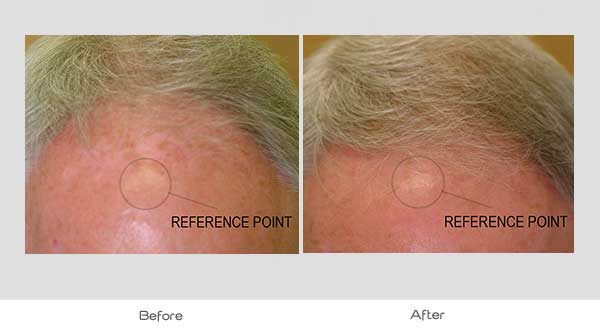
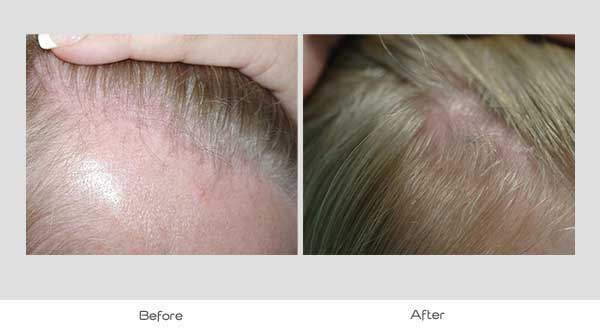
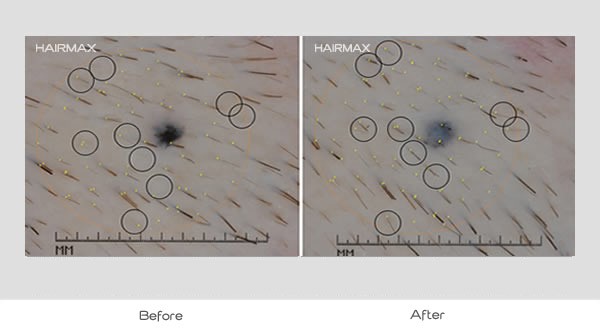
Qualified subjects had global images recorded at each visit using a stereotactic device. The global images above correspond with the un retouched Macro images below.


Male - Before and After

Female - Before and After

Non-Vellus Hair Density Macro Images

At baseline, a circle approximately 1 inch in diameter, positioned in the transition zone of the scalp, was identified as the site for hair clipping and tattooing. Within this site was the target area for the hair density evaluation. Subjects were evaluated at baseline, week 8, week 16 and week 26 Digital images captured by FUJI S2 were taken of the target site within the clipped area following the site preparation. A 21 inch monitor was used for blinded evaluation.


Studies Objectives

The studies were designed to support the 510K submission to the FDA and was subjected to an IRB approval and complied in accordance with GCP (Good Clinical Practices). The objectives of the study in males were to assess the following:


  • promotion of hair growth through changes in hair count
  • cessation of hair loss
  • scalp overall health
  • safety


Study Design

These four studies were designed as a multi-center, randomized, sham-device controlled trial conducted at eight sites in the United States. Subjects were to use the device three times per week on non-consecutive days for a total of 26 weeks. Hair count measurements were performed at baseline immediately prior to randomization and again at 8, 16 and 26 weeks.


Subject Population and Demographics

The study population included males and females between the ages of 30 and 60 years with a diagnosis of androgenetic alopecia who had been experiencing active hair loss with the last 12 months. The inclusion criteria required a Norwood-Hamilton classification or IIa to V and Fitzpatrick Skin Type I to IV. All subjects were randomized. A biostatistician calculated the study to be of a proper size to gauge statistically significant results.


Methods

After an assessment of the scalp for androgenetic alopecia and exclusion of other dermatological conditions, subjects were randomized with either active or sham devices. Subjects were then photographed for global evaluation, had the target site of the scalp identified and tattooed for baseline density and were given the device without investigation usage instructions per protocol for OTC use. Subjects returned to the clinic at 8 and 16 weeks with a final visit at week 26 for clinical evaluation.

The results of the key clinical study performed with the HairMax LaserComb in 2006 which led to FDA Clearance to market in 2007 was published in the May 2009 Issue of Clinical Drug Investigation. The article entitled, HairMax LaserComb® Phototherapy Device in the Treatment of Male Androgenetic Alopecia* is indexed as Clin Drug Invest 2009: 29 (5): 283-292 in most of the biomedical databases such as MEDLINE, EMBASE/Excerpta Medica, etc.


The HairMax LaserComb is the only home use laser phototherapy medical device with FDA marketing clearance for the treatment of certain classes of Androgenetic Alopecia in males and females*.

Home | Introduction | Clinical Study | FDA Marketing Clearance | FAQ'S | Testimonials | Patient Education | Science | BibliographyHistory | Medical Advisory Board |Contact Us

*The HairMax Advanced 7, Lux 9, and the Professional 12 models are indicated to treat Androgenetic Alopecia, and promote hair growth in males who have Norwood Hamilton Classifications of IIa to V and in females who have Ludwig (Savin) I-4, II-1, II-2, or frontal patterns of hair loss and who both have Fitzpatrick Skin Types I to IV.


©2011 Lexington International, LLC. All rights reserved.
Privacy Policy Information published on the website is the property of Lexington International, LLC and can not be duplicated without permission.